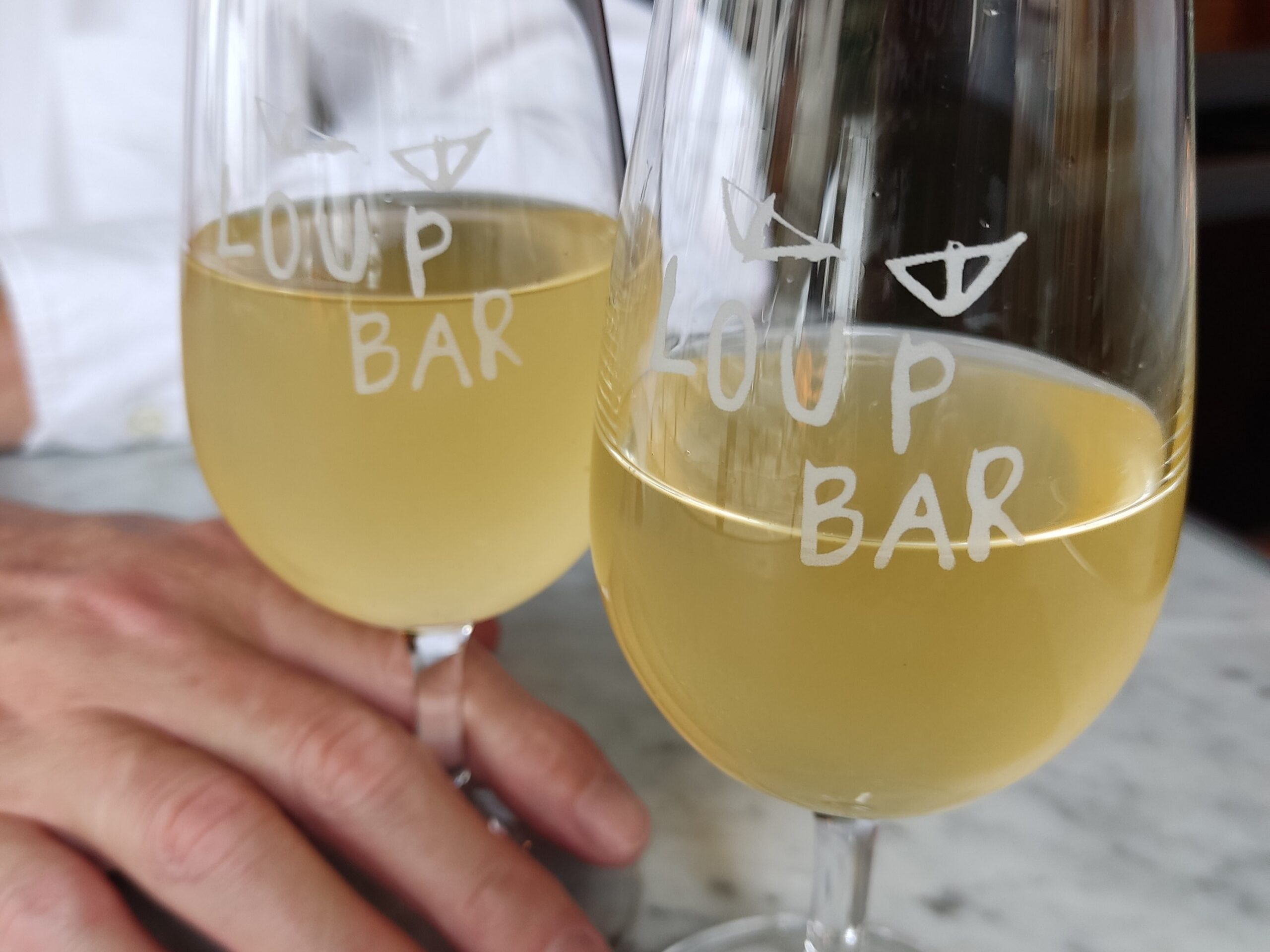
Stepping Out From the Shadows With a Strong Opinion Somebody Needed to Share
Natural wine typically means minimal intervention: organic or biodynamic farming, native yeast fermentation, a light touch in the cellar, and little to no added sulfites. On paper, that sounds pure, even romantic. In the glass, it’s a different story. “Natural” often becomes shorthand for excusing instability, volatile acidity, refermentation, and bottle variation — as if flaws were somehow proof of authenticity. My issue isn’t with responsible farming or genuine restraint in winemaking. It’s with rebranding technical failure as virtue just because it’s marketed as natural.
Disclosure: Some links may be affiliate links where we receive a super-small commission at no additional cost to you if you click through and make a purchase.

Almost Four Decades in the Wine Business
During my thirty-nine years in the wine business, thirty-one of them self-employed, I fought hard to avoid the limelight. I promoted the product, not myself. Anonymity mattered to me.
I was known to wholesalers, retailers, and restaurants during my decade as a regional marketing manager for wineries and importers. My customers knew me during two decades as a retailer. But my personal philosophy never changed: do the job well, go home, and be left alone.
Eventually, taking my wife out to eat in my hometown became impossible. Customers would huddle at our table mid-meal. So, we stopped eating out locally and started traveling constantly for wine and food instead.
Launching this blog, and taking a stand on a genuinely controversial topic, feels strange given all that. But we invested over $40,000 USD developing our European wine tours. I can’t hide behind my cloak of invisibility forever. To promote what I believe are the best wine experiences anyone has attempted, I need to show up. So here we are.
How Wine Culture Has Shifted Since We Left America
When we left the U.S. at the start of 2018 to promote wine tourism in central Mexico — leading tours through Querétaro and Guanajuato — the wine world looked very different. Millennials were buying wine through apps, skipping mom-and-pop shops entirely. Natural wine wasn’t a thing yet. Neither was orange wine, zero-alcohol wine, or Gen Z drinking wine (they were still underage). Fast forward eight years, and all of that has changed.

Understanding Gen Z’s Wine Habits
I’ve picked up a fair amount about Gen Z through clients on our wine tours. They aren’t very good at communication and eye contact. Most spend 90%+ of their day glued to a phone, but they can look up anything in a millisecond.
This is the consensus generation. They don’t trust a single expert. They poll broadly across sources to determine value. The catch? Their trusted sources are often social media influencers, which creates an echo chamber. Like-minded voices repeat the same message until it becomes accepted truth. That’s how kale, Brussels sprouts, and those ridiculous tumblers became universally loved. Influencers. It’s very common in America and slowly spreading worldwide.
Why Nothing “New” Was Left to Discover
In my four decades in the wine business, genuine “emperor has no clothes” moments have been rare. Maybe the closest Gen X equivalent was when sommeliers latched onto Grüner Veltliner — laughable given its lack of commercial viability, but at least it wasn’t flawed.
The uncomfortable truth: people like me were already hawking Arneis in the early ’90s, direct-importing Txakoli, and case stackers of Soave, Vermentino, Verdicchio, and Verdejo by 2000. We really didn’t leave any quality wine left for millennials and Gen Z to call their own. With nothing left to discover, they had to (re)invent something new and ascribe it magical qualities — giving influencers a trend to brand as uniquely theirs. Regrettably, they came up with natural wine and orange wine.
Why Younger Generations Are Drinking Less Wine
It’s no surprise younger generations drink less alcohol overall. Weed is legal nearly everywhere now, and vaping beats inhaling smoke. Wine, meanwhile, carries the stigma of being “what the oldies drink”, and therefore it has zero value.
But here’s the real issue: if you’re told natural wine defines your generation, spend $70–$80 on a bottle, and it tastes like vinegar, of course you’d conclude wine isn’t for you. Most young people don’t dislike wine. They’ve simply never had a good one.

Why Natural Wine Is Flawed
Let’s get straight to it: natural wine is a flawed concept. It’s built on the premise that sulfites are somehow bad for you. This mindset echoes the same skepticism that fuels vaccine distrust.
Sulfites are arguably the single greatest discovery in winemaking history. They let you enjoy a bottle from the other side of the planet with almost zero risk of spoilage. Skip the sulfites, and volatile acidity shows up fast — often before the wine even leaves the winery, and almost certainly after it travels 10,000 miles.
Here’s what sulfites actually do:
- Kill yeast cells, preventing spontaneous refermentation during shipping
- Keep wine shelf-stable long after bottling
- Prevent volatile acidity (V.A.)- the actual reason most natural wine tastes like vinegar
The reason most natural wine tastes like vinegar is because of V.A., or if it has C02 it’s because of refermentation in the bottle. You simply can’t make a quality wine without sulfites, no matter who the winemaker may be.
Yet an entire generation has bought into the idea that these wines are healthier and worth celebrating as a generational symbol. It’s classic projection of what you want to be true, being true. However, there is nothing of quality or substance to these wines at all. To borrow a Gen Z phrase, Natural Wines are “Polyester”. You are literally wasting your hard-earned money on drinking vinegar. Stop. Go buy another tumbler instead.

Three Stories That Explain My Position on Natural Wine
Before I rag on orange wine, I’ll share three short stories about natural wine to explain my position.
Story One: Mexico City.
Mexico City is awash in natural wine. One sommelier who was training a bunch of fledgling sommeliers made it their thing and preached the sermon from the mountaintop. Since Mexico doesn’t have a deep wine culture, newcomers to the industry follow blindly. Many natural-wine-only bars and restaurants have popped up across the city.
My wife and I were dining at a nice restaurant in Roma Norte when four Gen Z Americans sat down at the table next to us. They ordered a bottle of natural wine. After tasting it, the man who’d ordered it said: “I know I’m supposed to like natural wine, but every one I get tastes like shit.” You would think after repeatedly having $80 vinegar experiences, it would trigger a lightbulb moment. Instead, he blamed his own palate, when really, his sense of taste was rejecting bad wine.
Story Two: Sicily.
Tiffany and I visited one of the most famous cult natural wine producers on the island. The ninety-minute tour with the owner and winemaker was genuinely excellent. Then came the tasting — wines retailing for €80–€90, already loaded with volatile acidity. I wouldn’t pay $5 for them unless I was making salad dressing. I’d have preferred an $8 Nero d’Avola from the commercial winery down the road. We left empty-handed.
Story Three: Guanajuato.
Two wineries we visit regularly are run by younger winemakers. One makes excellent wine, but he’s fallen under the influence of the natural wine movement and started aggressively cutting his sulfite usage. For context: 150ppm of sulfites are standard for commercial wineries, 100ppm for organic, and maybe 80ppm for biodynamic — rarely lower, and only with perfect, organic fruit.
He made a stellar 2022 Pinot Noir that I tasted fresh at release and immediately bought a case of. Three weeks later, I opened another bottle. It was a completely different wine, loaded with volatile acidity and essentially undrinkable. A simple, correct dose of sulfites at bottling would have prevented the entire problem. It makes a decent salad dressing, but $35 is steep for vinegar.
Even Next Generation European Winemakers Reject Natural Wine
During our sixty-day trip through the Rhône Valley, Piedmont, and Rioja, we asked roughly 180 winemakers about natural wine. Many were far younger than me. Most of them rolled their eyes and said only somebody with no real experience making wine would do something so stupid. All of these next-generation winemakers had parents who made wine before them. Their experience wasn’t theoretical, but rather practical. While I noticed ceramic eggs and many organic vineyards, I saw zero natural wine or orange wine.
A Word to Gen Z
I have real empathy for Gen Z, and I’ll even apologize for discovering and promoting so many wine gems over the decades. But forcing yourself to drink flawed wine because an influencer told you to isn’t punishing me, Gen X, or “the oldies.” You’re only punishing yourself, and it’s hard for us to watch, painful even.
Do yourself a favor: Suck it up, walk into a real wine shop, and ask the grizzled veteran behind the counter what he drinks at home. I guarantee it will beat the least offensive natural wine you’ve ever choked down.

A Quick Word on Orange Wine
I’m not a fan of orange wine, and here’s why. Orange wine is white wine fermented in contact with its skins that are normally pressed off before fermentation begins. That skin contact adds tannin, oxidation, and arguably some flavor.
Here’s my issue: what is white wine actually for? Outside of Chardonnay, which is often barrel-fermented and sometimes goes through a secondary fermentation, nearly every white wine in the world is fermented in cold stainless steel tanks. It only sees one fermentation, maintaining acidity and fresh fruit aromas and flavors, and is bottled young without oak aging.

When you ferment on the skins, adding tannin and oxidation to the wine, how is that enhancing freshness? Answer: it isn’t. It’s different for difference’s sake. It’s not improving the wine, just creating another SKU, an object de art, for the winemaker to use to inflate their fragile ego.
“Look, I’m a creative genius — I made a white wine that isn’t white, a fresh wine that isn’t fresh, a tannic orange abomination!” It’s not clever. It’s a textbook case of “less” being dressed up as “more”.
Fermented traditionally — just the juice in cold steel tanks — the result would win ten times out of ten. But sure, let the “chef” express himself. Once again: the emperor has “no” clothes, but if we pretend hard enough, we can convince ourselves that the frock is wonderful.
Different isn’t automatically better, and any philosophy needs an end that justifies its means. If your result is a tannic, oxidized white wine, it might be time to reconsider your means.
Thomas Pence
Leave a Reply